

The global Beauty & Personal Care market is a highly diverse ecosystem, shaped by the racial, cultural, and socioeconomic heterogeneity of consumers in each region. Factors such as skin phototype, hair morphology, climatic conditions, cultural practices, and aesthetic perceptions generate differentiated cosmetic needs, driving the development of specific categories, formulations, and rituals.
The cosmetics market is one of the most dynamic in the global economy. Several reports indicate that it will be worth approximately US $380 billion in 2026, with a projected value of US $560 billion by 2032 and a CAGR of 6.64% for this period.
The Asia-Pacific region is the largest, accounting for approximately 39% of the total market. It is followed by Europe with 26%, the United States with 22%, Latin America with 9%, and the Middle East and Africa with 4%.
As a result of this diversity, market growth is not uniform: each region leads in different categories and generates its own trends. Asia Pacific stands out for its innovation in skincare and preventative routines, Europe for its dermocosmetics and scientific approach, and North America for its inclusivity, personalization, and clean beauty.
Latin America, meanwhile, is experiencing dynamic growth in fragrances, hair care, and body care, influenced by ethnic diversity, climate, and a strong sensory culture, while the Middle East and Africa are showing increasing sophistication in hair care and products adapted to skin with high environmental exposure.
These local realities are progressively converging, redefining global standards of innovation, inclusivity, and cultural relevance. These are some of the main trends projected for 2026:
The seventh sense: Recent research suggests that humans can detect objects hidden under sand or other materials without directly touching them – a skill called remote touch, which could be our seventh sense. This new sense would join the five classic senses: touch, hearing, sight, taste, and smell, and the sixth, proprioception (which allows the brain to know the position of body parts without using sight).
The research indicates that humans could perceive an object before seeing or touching it. In the near future, we will see innovations in tactile concepts based on these findings, opening the door to new sensory experiences in skincare and makeup.
Freeze-Dried beauty: We will see a boom in freeze-dried formats like powders and tablets that are activated with water. These formats are ideal for travel, subscriptions, and situations where small storage spaces and easy transport are needed.
Biobots: These are bio-inspired or biohybrid systems that combine biological components, such as cells, enzymes, or naturally derived materials, with engineering and biotechnology principles to perform specific functions in a controlled manner.
Their development has been driven by advances in synthetic biology, nanotechnology, and materials science. In skincare, they represent an emerging innovation with the potential to transform how cosmetic actives are delivered.
Their application will allow for more precise and targeted release of key ingredients into the skin, responding to stimuli such as pH, temperature, or skin condition. This could improve the efficacy of anti-aging, repairing, or soothing actives, optimizing their action and reducing the amount of ingredient required.
Hair essences: This is a growing trend in Korea: the expansion of facial essences concept into hair care. We’ll see traditional skincare mechanisms like cica, soothing, and calming adapted to soothe scalp irritation and treat hair loss.
From glass skin to glass hair: In 2026, we’ll see this trend expand into hair care, but at a deeper level than just shine. This concept pays greater attention to scalp health, including microbiome balance and hair barrier repair.
Atypical inspirations: Niche perfumery in 2026 will be marked by atypical inspirations from ingredients that challenge traditional olfactory codes and respond to the search for more emotional and authentic sensory experiences.
Notes inspired by mineral materials, smoke, metallic accords and synthetic metal molecules, damp earth, hot stone, sea salt, fermented beverages, herbal infusions, smell of toast, electricity, hot oatmeal, green coffee, plant-based leather, pet-inspired accords, croissant, and rice, among others, will gain prominence.
Less is more beauty: Long, multi-step routines are about to evolve. We’ll start seeing fewer-step, but smarter options, thanks to multifunctional products. Evidence of multifunctional effectiveness will drive innovation in the development of new, shorter routines. All-in-one is the new black.
Premiumization of oral care: There is a growing consumer demand for premium oral care products, including high-quality materials, formulas with new benefits, and high-end design aesthetics. The goal is to enhance daily hygiene routines with new benefits and claims. This trend represents a significant opportunity for innovation in our industry.
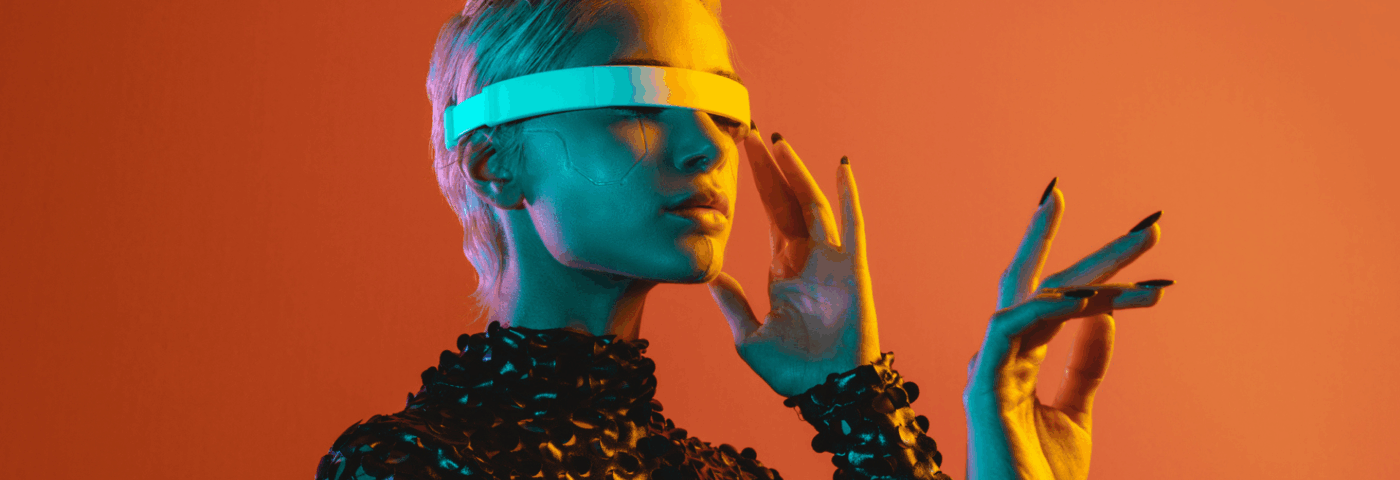
Glitchy beauty: Pinterest presents this trend as one of the key protagonists for 2026. It represents an aesthetic and cultural movement that merges traditional luxury and glamour with digital, imperfect, and disruptive elements inspired by technological “glitches” (visual errors such as distortions, broken pixels, and interferences).
In cosmetics, this trend will manifest through irregular metallic finishes and fractured chrome effects, holographic, pixelated, or iridescent surfaces, contrasts between polished skin and unexpected graphic details, and the use of neon hues, silver tones, electric violets, and digital reflections. Additionally, it will feature looks that blur the boundaries between the real and the virtual, evoking an image that appears ‘interrupted.’
Cloud dancer: Pantone has selected the soft white “Cloud Dancer” as the Colour of the Year 2026. This gentle white is characterized by its understated presence and its contribution to visual calm. The shade, described as balanced and light, appears within a broader cultural context where designers and creatives are re-evaluating the role of clarity, simplicity, and spatial stillness.
This is a colour that will be highly valued in environments that support reflection and measured creativity rather than constant acceleration, and it is sure to inspire disruptive concepts in fragrances, makeup, and skincare.
Pre/post skincare: Minimally invasive aesthetic treatments (lasers, peels, energy devices, injectables) are driving a range of products designed to prepare, repair, and strengthen the skin barrier, as well as reduce inflammation. In 2026, we will see a boom in pre/post-procedure aesthetic kits and new co-creation concepts with clinics and aesthetic centres.
2026 brings countless expectations, but it will also lead us to reflect on the fact that youth is not static; it is nurtured, enjoyed, and transformed. Innovation will be measured not only by evidence and technology – AI, personalization, biochemical breakthroughs – but also by the ability to generate trust, emotional well-being, and relevant rituals in the consumer’s real life.
In a context of saturation, the brands that will win are those that simplify without trivializing and that combine scientific rigour with cultural sensitivity. As Madonna said some years ago, “Reinvention is how I stay alive.” In 2026, that decision will be guided by knowledge, authenticity, and purpose.
Feeling inspired?
Then why not visit one of the in-cosmetics events around the world?