

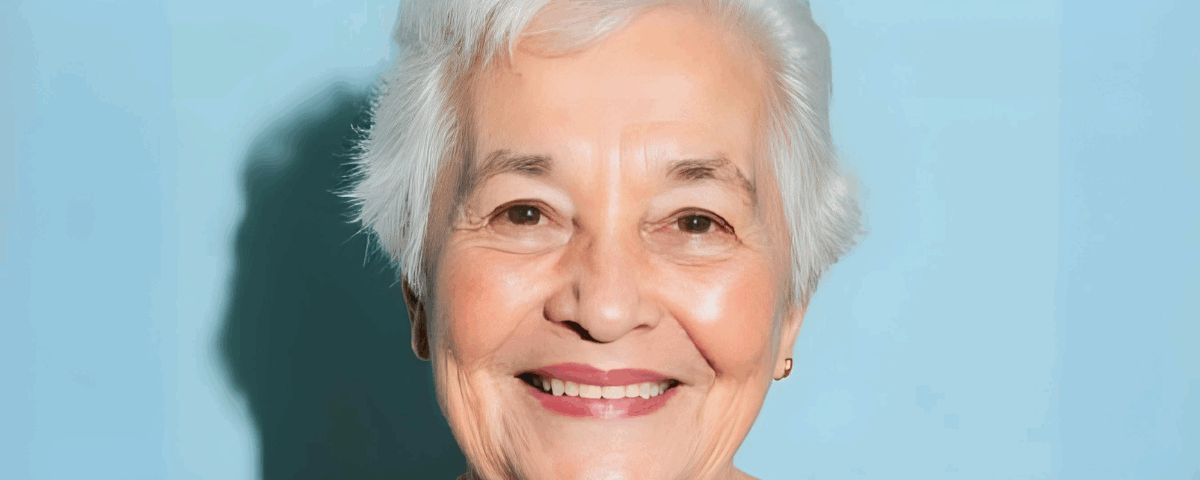
Over 80, more style: the new map of senior cosmetics. At this age, numbers are a thing of the past. The beauty of longevity is not a niche: it can become established as the new focus of the category.
Today’s 80-plus consumer who buys cosmetics is not the same as a decade ago. They value autonomy and dignity, seeking products that give them back control over their daily routine, simplify fine tasks (such as opening a bottle or applying foundation), and prevent cognitive fatigue.
Their relationship with beauty is deeply emotional – they want to look good to feel good, to connect with their history, their identity, and their social circle.
In many cases, they share decisions with family members or caregivers; they are drawn to classic shades, comfortable textures, and familiar scents, while also willing to try tangible innovations that include ergonomic applicators and hybrid formulations.
80+ represents a significant market opportunity. The world’s population is ageing significantly and the global number of births continues to fall.
At the same time, those over 80 are the fastest-growing group: this population is expected to triple between 2020 and 2050, rising from approximately 137 million to 425 million.
The global fertility rate continues to decline; by 2025, it is estimated to be between 2.3 and 2.4 children per woman, a figure below the population replacement level and reflecting a sustained trend toward fewer births.
These demographic changes reflect a clear trend: fewer births and a population that not only lives longer but is aging at an increasing rate, posing global challenges in sectors such as healthcare, pensions, social care, and, of course, beauty and cosmetics.
This consumer is motivated by three aspects of cosmetic products: First, functional wellness, which should ensure less tightness, greater skin comfort, and easy-to-style hair. The second aspect is related to safety, eye hygiene, a low risk of irritation, and easy label reading and benefits. Finally, the skin in this segment has specific needs. It is thinner and drier, with a fragile skin barrier, and is more sensitive to strong fragrances.
People also experience decreased visual acuity, high-porosity hair, and more dehydrated lips. They seek concrete, visible solutions, not vague promises. This is a consumer with high purchasing power.
Skin age 80+ presents specific needs. The barrier function is more fragile due to decreased lipid synthesis and shorter ceramide lifespans. TWEL, xerosis, and microcracks increase.
There is also a major proportion in senescent cells. Skin pH also tends to rise to around 6, which generates an imbalance in hydration mechanisms. There is less sebum production. The DEJ appears flatter, which is reflected in greater sagging and slower repair. The microbiome shows a notable decrease in diversity. Below, we will look at some of the most interesting trends in this segment.
24/7 pro-barrier and pro-comfort cosmetics
The main objective of skincare products in this category is to repair and seal. We see a boom in long-chain ceramides, cholesterol, fatty acids, hemisqualane, squalane, and film-forming polysaccharides as key players. We’re seeing occlusive creams and balms with an elegant sensorial appeal. Skin layering also presents an opportunity in this segment.
Smart active ingredients for very mature skin
Cosmetic chemistry is surprising us with a boom in next-generation, microencapsulated, slow-release retinoids. It’s also important to consider peptides that stimulate anchoring fibers, such as laminin and collagen IV, and botanical antioxidants rich in polyphenols. The “clinical yet gentle” claim is beginning to trend for this age group. Peptides focused on translucency benefits are also gaining relevance. Skin tolerance is emerging as one of the most important benefits of this trend.
Relipidization
This is the process of restoring and replenishing the skin’s natural lipids (ceramides, fatty acids, and cholesterol) that form part of the skin barrier. Relipidization seeks to restore lipid balance, returning flexibility, softness, and resilience. The benefits include reduced transepidermal water loss (TEWL), greater resistance to irritation, a softer and more elastic skin texture, a feeling of comfort, and reduced tightness, among others.
“Low-effort” textures and inclusive application tools
In makeup, we’re seeing wide-tipped pencils and sticks, non-slip grips, large buttons, high-contrast labels, and soft-press droppers. Mascaras with curved, self-adjusting brushes, eyeliners with a support stop for unsteady pulses, and wide-diffusion hairsprays to cover silvery roots without smudging.
There’s a boom in minimalist applicators and clean refills. Click-on caps and magnetic closures open easily. We’re witnessing the rise of universal design. Senior-friendly packaging is the new black.
Scalp health and grey hair treatment
We’re seeing rituals that begin at the scalp – oil-free serums with traditional active ingredients like panthenol, niacinamide and pre/postbiotics; creamy, low-lathering shampoos; ultra-gentle conditioners; and silver grey illuminators that neutralize yellow without over-drying. We’re going to see a boom in scalp essence formats. Claims of improved optical density and volumetric fibres will be a trend.
Microbiome and precision eye and lip care
We’re seeing new formats of periocular balms with elastic polymers that don’t migrate to the eye, and “water-lock” lipsticks with prebiotic/postbiotic active ingredients that reduce lip skin reactivity. In the coming months, we’ll see a rise in the “peri-zone care” concept (products for eyelids, corners of the mouth, and lip contour).
Accessible Technology – Practical AI and “senior-first” AR
New AI-powered skin tone assistants trained on very mature skin (pores, creases, translucency) and kiosks with physical buttons, large font, and audio guidance. Augmented reality with “highlight mode” and fewer steps; voice-activated expiration reminders; short video manuals and large subtitles. Accessible AI must address the issue of how cosmetics incorporate this population group in a hyperconnected world, where, despite not being native speakers of this trend, they feel included.
Ethical repositioning – messages of autonomy, not age
There is a very interesting development in marketing for this segment, with campaigns showcasing active and diverse people 80+; narratives of “expert care” instead of “radical anti-aging”. Co-creation with geriatricians/dermatologists to boost credibility presents a significant opportunity.
We are also seeing educational campaigns by local micro-influencers (grandmothers who create them), with a family focus and cultural respect.
Inclusive, sustainable, and refillable packaging
Lightweight, non-slip containers with magnetic openings and short-turn caps. High-contrast labels, step-by-step pictograms, and optional Braille. Click-in refills that do not require force. Large travel kits (not miniature ones that may be inoperable).
Acidic design (pH≈4) to retrain the barrier
There are scientific publications related to the goal of normalizing the elevated pH of mature skin, which is between 5.5 and 6, with gels that have a pH close to 4. The goal is to improve barrier integrity and the cohesion of the stratum corneum. There is great potential in the development of new skincare active ingredients that help reverse the high skin pH in mature skin.
How to win with the 80+ consumer in 2025
It’s important to consider wide grips, high contrast, pictogram instructions, audio, and large print. Promise less and deliver more: immediate relief + cumulative benefit (e.g., barrier today, firmness in 8 weeks).
Simplify the equation, with useful 2-3-step routines and “morning/evening” kits. Innovation is needed in tolerance testing for very mature skin, and in communication that celebrates autonomy.
Forever young = full beauty. Those who understand that the 80+ age group seeks comfort, control, and recognition – and translate this into sensorial formulas, accessible technology, and universal design – will lead the market with offerings that honour the past and embrace the present.
The most important thing is to reflect the vitality that the moments lived bring together because true beauty is illuminated by experience. If youth is a gift, age is a work of art. As Elizabeth Taylor said: “Wrinkles simply show where smiles have been.”
Feeling inspired?
Then why not visit one of the in-cosmetics events around the world?
The Well-Ageing Conference featuring speakers from L’Oréal and Amorepacific will be taking place at in-cosmetics Asia oin Bangkok on 5 November. Find our more here.