

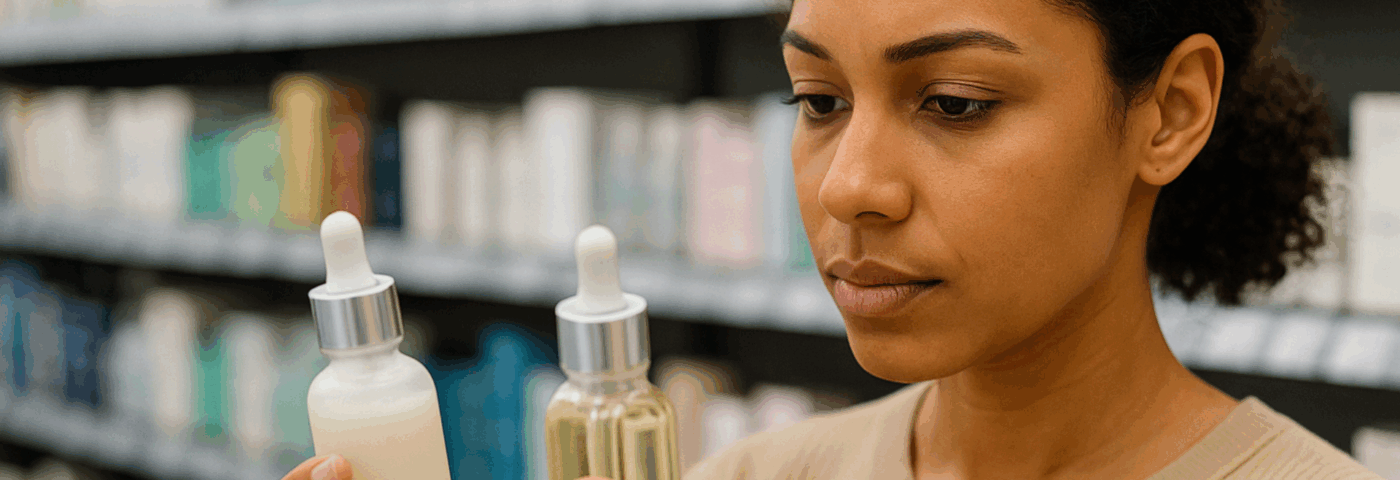
Dupe culture has exploded across the beauty industry. A viral foundation, mascara, or serum can be copied and stocked on supermarket shelves within weeks, offering consumers an affordable version of a luxury product.
For shoppers, it feels like democratisation – a beauty win at a fraction of the cost. For brands, however, it’s a more complicated story: duplication can serve as savvy marketing, but it also risks legal disputes, reputational damage, and stifling innovation.
The Australian brand MCoBeauty offers a fascinating case study in how duping has evolved from opportunistic mimicry to a structured business strategy. They don’t even hold back on calling it what what they do best,
Is it easier than ever?
If you are a seasoned cosmetic chemist, creating the exact texture and skin feel from the ingredient listing used to take many trials and errors.
Now, there are AI tools like Potion AI that can dissect your ingredient list into a formulation. You don’t even have to think; it literally takes 2 minutes.
Of course, you still need to try, but instead of manually experimenting with ingredient combinations and active ingredients takes seconds. This means that duping can be faster than ever.
Can you really dupe it?
The popularity of dupes is driven by accessibility and social media ( e.g. Lipstick Lesbians). In most cases, dupes have the 2-3 or at most the shown or claimed active ingredient added.
We all know that doing a masstige or lower category product at a fraction of the cost is not viable for the brand or the manufacturer, even in most cases, on a large scale. You can only mimic the texture.
Also, you cannot mimic the brand ethos. I think one of the most copied products I have seen is the Sol De Janeiro – Brazilian Bum Bum cream. I have even seen better textured dupes as well, but that does not mean they are sourcing Cupuaçu Butter from Amazon or that the sources of the ingredients are less altered.
There is a real ethical concern here. Of course, when we are formulating, there are benchmarks and inspirations from other textures created. In some cases, if a formulation is too stable, you might reverse engineer it, but we cannot create brand value just by being a cheaper version of something.
The other most concerning part of it is actually the misinformation age that we are living in.
TikTok has a huge volume of searches for dupes. I have seen DIYs of shower oils mixing baby shampoo and body oil. I wish it were that easy! Or a so-called dermatologist claiming ingredients are toxic or hormone disruptors.
Essentially, your feed determines what you might believe in, and a bit of luck, if you are into DIY, you might end up risking your skin in the process of creating a cheaper version of something else.
I think this is also a side effect of cancel culture because we are trying to cancel the brands that are charging a premium. Yes, the product might be a fraction of the cost, but we forget that every product sold is a fraction of someone’s salary. We choose to believe they just overcharge because they can.
Also, this can be true as well, but then it comes down to how much you believe in these brands’ stories and what drives you to buy them. Is it just the premium feel, or is there something deeper that resonates more? I think that is the key differentiation consumers need to consider.
The last place to be in this dupe world is probably a premium brand, since the cost of living crisis isn’t going away, but a luxury brand has much more to prove to its customers about what it stands for.
Yet the bigger question lingers: are dupes a clever shortcut to accessibility, or a slow erosion of the industry’s capacity to innovate?
References
RNZ: MCoBeauty follows a rigorous process when it dupes cosmetics – here’s what it looks like
Beauty Independent: MCoBeauty Faces Scrutiny Over Dupes And Legal Battles
Feeling inspired?
Then why not visit one of the in-cosmetics events around the world?